Friday, 22 February 2019

Photos Won’t Delete from iPhone iOS 12/11? Easy to Handle! 2019 Guide


What can Umate Do for You in Managing iPhone Photos

There are many benefits that everyone who uses Umate for iOS space cleaning enjoys. When it comes to photo management, it can do the following:


Bulk Delete Photos, Even the Photos Cannot Delete by iPhone: including current photos, previously deleted photos and the photos that “won’t delete from iPhone”.


Compress Photos: it can compresses photos losslessly to release 75% of iOS photo space.


Export Photos to PC or Mac: It exports original photos to PC or Mac as a backup for future use. You can preview your iOS 12/11 Photos on Umate interface before choosing choose to delete some or all of it.


Clear Up iOS Photo Caches: iMyFone Umate Pro also ensures to erase all iOS photo caches that occupy your iOS memory space and slow down your iPhone.
What You Can and Can’t Delete with iPhone Photo App

I have seen a couple of occasions where iPhone won’t let me delete photos, and I got to ask why iPhone won’t delete photos. I took my grievance to Apple forum, but I saw that other users are having the same experience. Then I got to research on the type of photo files you can and cannot delete the Photo app.


I got to find out that photos or albums that were copied to my iPhone by syncing with my computer cannot be deleted from photo app, but by deselecting such photos or albums from iTunes while carrying out another sync.

Read aslo: Can't delete photo albums on your iPhone or iPad? Here's why! >>
Can iCloud Photos be deleted?

Yes, iCloud photos can be deleted when you turn on your iCloud Photo Library while deleting photos from your iPhone. The truth is that such photos will also be deleted from all your iOS 12/11 and macOS devices that were connected to that iCloud account. Many people get to ask “How can you erase a photo off your iPhone without erasing off your iCloud Photo Library and other iOS 12/11 or macOS devices?” The simple answer is “turn off your iCloud Photo Library” before erasing any iOS photo.

Read aslo: How to access icloud photos >>

If you have any contribution, questions or inquiries concerning your iOS 12/11 photos not deleting, just drop a comment below. We’re always looking for inquiries to answer, and problems to solve.
You may also like:Tips:
Restoring Lost Photos and Videos from iPhone

If you have deleted some of your pictures or videos from your gallery, then there is a straightforward way to Recover Deleted Files iPhone back.

After you delete the media files from your gallery, be it photos or videos, then you must know that iOS has a feature that the deleted media files doesn’t get deleted immediately, but it gets compiled to a temporary folder from where it gets deleted after 30 days. If you lost data after you updated to a new iPhone, you can always use Gihosoft iPhone Data Recovery to get the data back from the old iPhone or backup. Should you wish to recover these files, you must go to that “recently deleted” folder and retrieve these files before 30 days.

If you use android phones, please choose Gihosoft Android Data Recovery.

Why Won’t Some Songs Sync to iPod? You Can Easily Fix It 2019


Why Won’t Some Songs Sync to iPod? You Can Easily Fix It 2019
So, some songs won’t sync to your iPod? Did you connect your iPod to your computer and try to sync music from iTunes, but when you disconnected your iPod and looked, some (or all) of the songs didn’t transfer over? You may be curious “why won’t some songs sync to my iPod” but this is actually a common issue. Sometimes, music won’t sync properly, even after iTunes tells you that the transfer was successful.
Reasons and Solutions - “Why Your Songs Won't Transfer from iTunes to iPod”

There can be many reasons why your songs won’t transfer correctly from iTunes to your iOS device.
Reasons:


Your files are formatted incorrectly. If your music is not in a format that is readable by iOS (for example, if your song is in .WMA format), then it may not transfer over correctly. iTunes is in theory supposed to convert certain file formats before you transfer them, but it doesn’t always.


There is a physical connection problem. For example, your USB cable may need to be replaced.


There is a network problem. If you are syncing through the network, check to make sure that the connection isn’t cutting out.


There is a software problem. There could be some compatibility or software problem with iTunes.
Common Solutions:

Tip 1: Update iTunes

Get the latest version of iTunes before you do anything else. If it’s a software problem, this can often fix it. To do this, go to Help > Check for Updates on iTunes.


Tip 2: Reboot your iPod

Turn off your iPod by holding down the Sleep/Wake button until a slider appears. Slide this to turn off your iPod. Turn it back on by pressing and holding the Sleep/Wake button again.

Tip 3: Reboot your computer

Just to be on the safe side, reboot your computer after you’ve updated iTunes. This will solve most problems.

Tip 4: Check your physical connections

Check to make sure your iOS device is correctly plugged into the computer. Swap out the USB cables and see if the one you were using was bad.

Tip 5: Check your network connection

Make sure your router is working correctly. Make sure your computer and devices are able to connect to the network.

Tip 6: Make sure iTunes is authorized on your computer

You can do this by launching iTunes, going to Store, and then choosing Authorize This Computer. You will then have to input your Apple ID.


Tip 7: Use a third-party music converter app

If iTunes isn’t doing it right, you could try to prevent compatibility problems by converting your music before you add it to your library or sync it with your iOS device.
How to Fix "Songs Won't Transfer from iTunes to iPod" If Tips Don’t Work
Tips:
Restoring Lost Photos and Videos from iPhone

If you have deleted some of your pictures or videos from your gallery, then there is a straightforward way to Recover Deleted Files iPhone back.

After you delete the media files from your gallery, be it photos or videos, then you must know that iOS has a feature that the deleted media files doesn’t get deleted immediately, but it gets compiled to a temporary folder from where it gets deleted after 30 days. If you lost data after you updated to a new iPhone, you can always use Gihosoft iPhone Data Recovery to get the data back from the old iPhone or backup. Should you wish to recover these files, you must go to that “recently deleted” folder and retrieve these files before 30 days.


If you use android phones, please choose Gihosoft Android Data Recovery.

How to Find iPhone Backup Location and Delete Backups 2019


How to Delete Different iPhone Backups


Part 1: How to Delete iPhone Backups from iTunes


Part 2: How to Delete iPhone Backups from iCloud.


Part 3: How to Permanently Erase iPhone Data before Selling It, Repairing It, or Giving It Out.
#1. How to Delete iPhone Backups from iTunes

iTunes Backup is important in keeping a secured version of your iPhone data on a single computer. But there are times when multiple versions of your iPhone data will be stored on your Mac or PC by iTunes. Deleting multiple iTunes backup can help to conserve valuable storage space.

To delete iTunes backups, you will have to first locate where iTunes stored your iOS backups on your PC.


Find Backups on your Mac: From the “Menu” bar, click on the “Search” icon, then enter ~/Library/ApplicationSupport/MobileSync/Backup/.
However, If you choose to locate a specific backup on your Mac OS, you can follow the path: iTunes > Menu > Preferences > Devices > Contro-click the backup > Show in Finder.


Find Backups on your Windows PC: Go to \Users\(username)\AppData\Roaming\Apple Computer\MobileSync\Backup\.
Another way of locating your iTunes backup on your PC is through this path: Enter %appdata% in the Windows’ Search bar > Enter > double click on these folders: Apple Computer > MobileSync > Backup.

Once located the backup, you can begin to delete such iPhone backups

Step 1: For Mac: click on iTunes > Preference.

For Windows: Click on Edit > Preference.

Step 2: Go to Device.

Step 3: Select the backup that you want to delete. If there are multiple backups, you can move your mouse over then to view more details.

Step 4: click on Delete Backups, and confirm.


#2. How to Delete iPhone Backups from iCloud

Many iCloud users go looking for a list of their iCloud backups in iCloud when they want to delete their iCloud backup files. You should know that you won’t find a list of your backup on iCloud. Here is how to find a list of your iCloud backup on iPhone, PC or Mac.


On iPhone: if you’re using iOS 10.3 or later, go to Settings > Your Name > iCloud > iCloud Storage > Manage Storage.


On Mac: Go to Apple menu > System Preferences > iCloud.


On Windows: Go to iCloud for Windows > Storage.Sponsor ads:Schedule Text Messages on iPhoneMust Read:If you lost data after you updated to a new iPhone, you can always use Gihosoft iPhone Data Recovery to get the data back from the old iPhone or backup.


Gihosoft Free iPhone Data Recovery:iphonerecovery.com


If you use android phones, please choose Gihosoft Android Data Recovery

To delete iCloud backup on your iPhone, iPad or iPod Touch

Step 1: Click on Settings > Your Name > iCloud > iCloud Storage > Manage Storage.

Step 2: Choose a backup you will like to delete.

Step 3: Delete the backup.


#3. How to Permanently Erase iPhone Data before Selling It, Repairing It, or Giving It Out
Why should We Permanently Erase iOS Data?

Permanently erasing iPhone data is important at one point in time or the other. Every iPhone user will have to erase his or her iPhone data if faced with any of the following situations:


When you have to sell your old iPhone in order to get a new version.


When returning your employer’s iPhone.


When you feel like starting afresh.


You want to erase some data to improve performance.


When you are trying to hide a file permanently.

Confidentiality and privacy are the prime purposes why many iOS users seek for a tool that can aid them in erasing iOS data permanently.

Saturday, 18 August 2018

How to access Restrictions on iPhone and iPad


How to access Restrictions on iPhone and iPad

In iOS 12, Restrictions have moved to the new Screen Time settings. For completeness’ sake, this tutorial provides instructions on accessing Restrictions on both iOS 12 and older versions.

How to access Restrictions/Parental Controls on iOS 12

Managing restrictions using parental controls has changed and is now an integral part of Apple’s new set of Screen Time features which are part of iOS 12’s digital well-being initiative.
All of the parental controls found on iOS 11 and earlier continue to be available to parents who wish to manage their family’s devices with Apple’s newest iOS 12 software.
1) Open the Settings app on your iPhone or iPad with iOS 12 or newer.
2) Tap Screen Time.
3) If you’ve previously enabled Screen Time, skip to step 4. Otherwise, tap Turn On Screen Time, hit Continue on the following screen and then tap This is My Child’s iPhone.
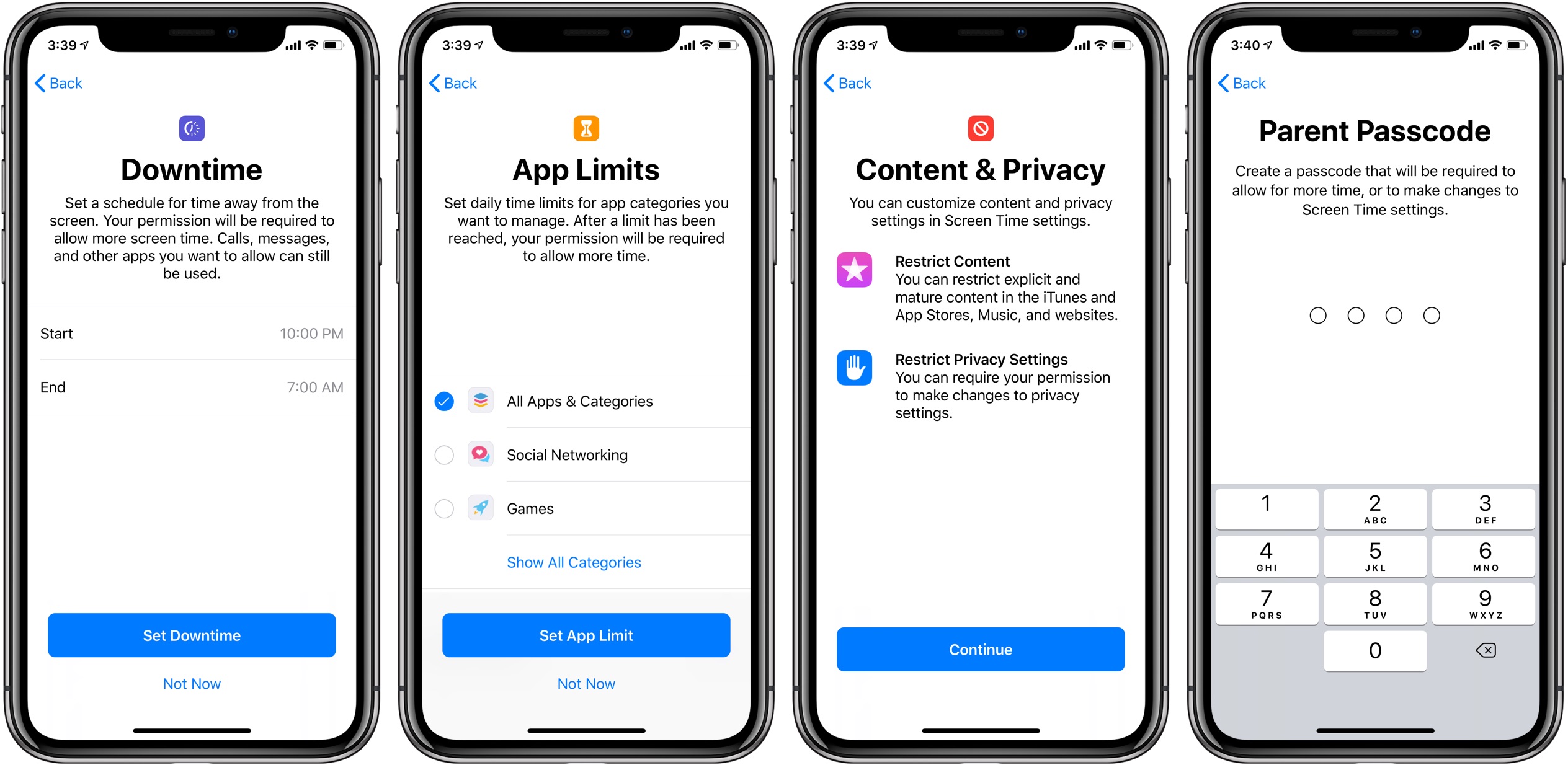
Follow the onscreen instructions to create your Restrictions passcode before you’re allowed to use the various parental controls that are at your disposal, like Downtime, App Limits, content and age restrictions and more, as shown on the screenshots below.
4) Tap Content & Privacy Restrictions.
To enable Restrictions, slide the switch Content & Privacy Restrictions to the ON position.
iOS 11’s Restrictions have become iOS 12’s Content & Privacy Restrictions
Despite the name change, the Content & Privacy Restrictions section is precisely where you’ll find all of the parental controls for iPhone and iPad that you’ve come to know and love in older iOS editions, plus several new controls as part of the rich, new Screen Time section.
TUTORIAL: How to restrict kids’ screen time on iPhone and iPad
Here’s what parents can do with Screen Time:
  • Activity Reports: Parents can see detailed activity reports for their own and their kids’ devices, including the total time spent in each app, usage across categories of apps, how many notifications are received and how often a person picks up their iOS device.
  • Downtime: You can set a schedule for your junior for time away from the screen. Calls, messages and other apps you specifically want to permit can still be used. A parent’s permission is required to allow more screen time once the time hits zero.
  • App Limits: Set daily time limits for app categories you’d like to manage to stop your kids from spending more than, say, 45 minutes a day on social media apps or games.
  • Always Allowed: You can white-list critical apps you want your child to be able to use at all times, like the Phone and Messages apps.
  • Content & Privacy Restrictions: All of the Parental Controls you previously accessed through Settings → General → Restrictions are now available from there.
Setting a Screen Time password prevents kids from changing these settings on their own.
To restrict apps kids will be permitted to access, just tap Allowed Apps and disable any apps you don’t want to be exposed to your junior on this device. Keep in mind that you must enable and configure Screen Time on all devices used by your children.
Screen Time is great for everyone to better understand and manage their device usage, but can be especially helpful for kids and families. Not only are parents able to access both their own and kids’ activity reports right from their own iOS devices to better understand where children are spending their time, but also set app limits for them remotely and much more.

Jihosoft Giveaway Alert:
The best iPhone Backup Extractor software to extract photos, text messages, contacts, voice memos, note, WhatsApp, Viber and etc from iPhone/iPad backup.
Jihosoft Android Data Recovery: the best Android Data Recovery software for Windows and Mac to recover deleted contacts, messages, photos, videos, WhatsApp and etc from Android devices.
If you can’t sync with iTunes and want to rescue data from a disable iPhone, you could try Gihosoft iPhone Data Recovery. Also feel free to ask questions on the iDevice is disabled error in the comments section below.
Screen Time data syncs across devices through iCloud.
Screen Time is account-based and as such works across all of a child’s iOS devices.
By basing Screen Time reports and allowances on kids’ total usage, there’s no cheating. Screen Time also works with Apple’s Family Sharing feature, allowing parents to also configure Screen Time settings remotely for their child within the same Family Sharing group.
Managing Screen Time features locally on a child’s device does not require Family Sharing.
Continue reading the article for the additional step-by-step instructions explaining how to access the iPhone and iPad parental controls on iOS 11 and older editions.

Thursday, 3 August 2017

How to find wifi passwords with iPhone 2017!

How to find wifi passwords with iPhone!

Hello guys, this is George and today im going to show you how to ''hack'' a wifi password with your jailbroken iPhone, ipod touch or iPad. The program that we are going to be using is called i wep pro and heres how to get it:Must Read:iPhone white screen
1. open up cydia
2. go to manage sources
3. add these two sources: http://cydia.xsellize.com
                                        http://iwazowski.com/repo
4. search cydia for iwep pro 4.1.2 and install it
5. then go open again cydia and search for iwep STDic 2005, 2006, 2007, 2008, 2009, 2010, 2011 and     install these as well.
6. respring your device and open up iwep pro
7. watch the video below to see how you activate the program and  which networks are supported 
      
                    Enjoy!   
Must Read:Jihosoft iPhone Backup Extractor Extract and recover all types of data from iPhone backup files, such as camera roll photos, videos, SMS, contacts, reminders, WhatsApp, and etc.
Gihosoft Free iPhone Data Recovery is a professional iPhone Data Recovery software to get back all your lost text message, photo, video, call history, note, contact and more from iPhone/iPad/iPod Touch.